
Car Seat and Booster Seat Safety
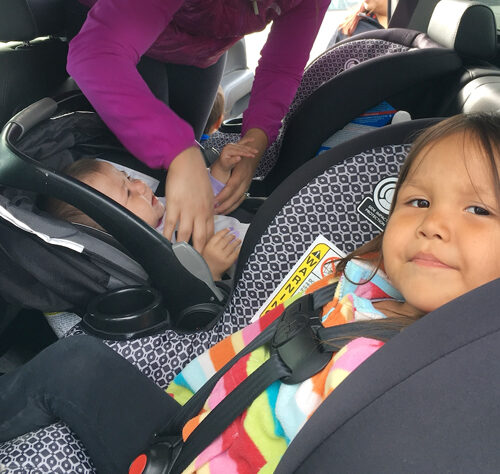
Every child needs the right car seat for their age and size. A properly installed car seat is one of the best ways to protect your child in a crash.
Whether you’re installing a car seat for the first time or just want to make sure everything is still correct, certified technicians are prepared to help you.
What We Offer
Center for Safe Alaskans has worked to keep Alaska families safer on the road for decades. We are here to help you install your car seat correctly and answer all your questions. Our certified Child Passenger Safety Technician Instructors train technicians statewide, conduct annual transportation safety research across Alaska, and provide hands-on education to families, schools, and community organizations.
Free Car Seat Checks
Get help from a certified Child Passenger Safety Technician. We will help you determine if you’re using the right car seat, it’s installed correctly, and we can answer all your questions. Sessions are available in-person or virtual. Most appointments take about one hour. We will inspect your car seat, test the installation, and teach you how to use it correctly every time.
It’s free. Center for Safe Alaskans offers free in-person and virtual car seat checks for all caregivers.
Center for Safe Alaskans offers a limited number of car seats and booster seats for families in financial need. Small financial donations are welcome, but are not required.
We serve families across Alaska. If you’re outside Anchorage, we can help you find a certified CPST near you through the national technician locator, and our staff are available by phone and email to answer your questions from anywhere in the state. Call us at 907-929-3939.
Car Seat Basics Online Course
Car Seat Basics is a free 60-minute e-learning course for anyone. Learn to keep children safe in cars as they grow. Complete the whole training or chose specific modules on rear-facing and forward-facing car seat use, as well as booster seat and seat belt use.
Get Involved: Trainings and Events
Our Child Passenger Safety Technician Instructors give presentations statewide to groups, schools, agencies and institutions to promote proper transportation of children. Along with our partners, Safe Alaskans hosts many public car seat check-up events statewide every year. Safe Alaskans is a lead agency in the Alaska CPS Statewide Coalition to help coordinate CPS activities statewide.
Child Seat Safety in Alaska
Whether you’re driving in Anchorage, or other communities in the state, here are some tips to keep your child safe on Alaska’s roads.
Recommendations and Alaska Laws
The American Academy of Pediatrics recommends children ride in their car seat until they outgrow it and need to transition to the next stage. All children younger than age 13 should ride in the back seat of vehicles.

Rear-Facing Car Seats
Use rear-facing car seats as long as possible until the highest height or weight limit of the car seat.

Forward-Facing Car Seats
Use forward-facing car seats until the highest height or weight limit of the car seat.
Booster Seats
Use booster seats from the time they outgrow forward-facing car seats until they properly fit in a seatbelt.

Seat Belt
Keep your child in a booster seat until they fit in a seat belt properly. The seat belt should lie across the upper thighs and be snug across the shoulder and chest.
Car Seat and Booster Seat Laws in Alaska
Alaska laws require:
- Children less than 1 year of age or children older than 1 year but less than 20 pounds to be secured in a rear-facing car seat.
- Children 1 to 4 years weighing over 20 pounds to be properly secured in an appropriate child restraint.
- Children over 4 and less than 8 years of age who are under 4’9 and less than 65 pounds to be properly secured in a car seat or booster seat.
When Alaska laws and safety recommendations differ, Center for Safe Alaskans recommends the safest approach. Center for Safe Alaskans Child Passenger Safety Technicians and instructors rely on their certification, knowledge and experience, and the best practices promoted by National Child Passenger Safety Board and American Academy of Pediatrics.
Car Seat and Booster Seat Safety in Alaska's Cold Weather
Be Cautious with Bulky Coats
Keeping children safe in Alaska’s winter requires one extra step that many parents overlook: removing bulky coats before buckling. Choose thin, warm layers. Once secured, drape a blanket or coat over the front of the harness for warmth.
A thick winter coat or snowsuit worn under car seat harness straps can create dangerous slack — when a crash occurs, the coat compresses instantly, leaving extra space in the harness. That gap is enough to allow serious injury in a collision that a properly fitted seat would have prevented.
Once your child is buckled in, perform the pinch test: try to pinch the harness webbing at your child’s shoulder between your thumb and forefinger. If you can pinch any excess webbing, the harness is too loose. Tighten it until the strap lies flat and snug against the chest, with the chest clip positioned at armpit level.
Frequently Asked Questions
The Right Car Seat
The right car seat is the one that fits your child, fits your vehicle, and the one you can use correctly every time. The National Highway Traffic Safety Administration (NHTSA’s) car seat finder is an easy-to-use tool that helps you find the right car seat.
Choose an appropriate seating position in the vehicle. Not every car seat will fit in every vehicle or in every seating position in the vehicle. Some seating positions may not work for car seat use. Consider where other passengers need to sit in the vehicle.
Children under 13 are safest in the back seat. The American Academy of Pediatrics states all children younger than 13 years should be restrained in the rear seats of vehicles for optimal protection (and in a car seat or booster seat when appropriate).
Keep your child rear-facing as long as possible. The American Academy of Pediatrics recommends children use their rear-facing car seat to the highest weight or height allowed by the car seat manufacturer. In the state of Alaska, children must ride rear-facing until at least one year old and 20 pounds.
Keep your child in a booster seat as long as possible. Best practice is for a child to ride in a booster seat until they fit into a seat belt correctly. In Alaska, the child must be at least 8 years old or 65 pounds or 4 feet 9 inches. Use this checklist to test seat belt readiness.
- Can the child keep their back against the vehicle seatback?
- Can the child keep their knees naturally bent over the edge of the vehicle seat without slouching?
- Can the child keep their feet flat on the floor?
- Does the lap belt lie snugly across the upper thighs, low on the hips, not the stomach?
- Does the shoulder belt lie snugly across the shoulder and chest and not across the neck or face?
- Is the child able to stay in position for the entire ride?
Fit and Installation
Correct car seat installation varies. Either method is safe when all instructions are followed. Using both the lower anchors and a seat belt for the same installation is acceptable only when allowed by both the car seat and vehicle manufacturers.
A tether is a strap that connects the top of your car seat to your vehicle’s tether anchor. Unless prohibited due to weight limits by a car seat or vehicle manufacturer, the National Transportation Highway Safety Administration recommends use of the tether whenever a car seat is installed forward facing.
The car seat should move less than 1 inch side-to-side or front-to-back when pulling or pushing at the belt path using moderate force.
You should not be able to pinch excess webbing at the shoulder once the harness is tightened. Position the chest clip at armpit level.
The Life of a Car Seat
In some cases. If each of the statements below can be checked off, the secondhand car seat or booster seat may be ok to use.
- The history of the car seat or booster seat is known.
- The car seat or booster seat has never been in a moderate to severe crash.
- The car seat or booster seat has all it’s parts and appears to be in good working order.
- The labels are present showing the name/model number and date of manufacture.
- The car seat or booster seat is within its useful life and not expired.
- The car seat or booster seat does not have any recalls, or any recall has been corrected.
Yes. Car seats and booster seats have a useful life identified by their manufacturers and must not be used beyond their stated useful life or expiration date.
It depends. Recommendations vary by car seat manufacturer. Car seats and booster seats always need to be replaced after a moderate or sever crash. Caregivers should contact the car seat or booster seat manufacturer with any questions about whether a car seat needs to be replaced after a crash.
The National Highway Traffic Safety Administration’s Check for Recalls website can help you easily learn about safety recalls. We encourage caregivers to register car seats and booster seats to ensure you’re notified of recalls.
Car Seats with Other Vehicles
Yes, the FAA strongly encourages you to secure your child in an a car seat certified for use on aircraft. It’s the safest thing to do. Buckle up your child for the car ride to the airport, on the airplane, and when you arrive at your destination.
Sometimes. It is safest to use a towable recreational vehicle with passengers safely secured in the towing vehicle. Only certain seats in a motorized RV can be used for car seats. Contact the Center for Safe Alaskans for questions about your RV.
No. Car seats cannot provide protection and should not be used on ATVs. Car seats are designed and tested to protect children in motor vehicles that meet Federal Motor Vehicle Safety Standards.
More ATV safety guidance is available from the American Academy of Pediatrics.
School buses have the best safety record of all forms of ground transportation. They are designed to protect passengers without the use of seatbelts. They use a system known as compartmentalization to keep passengers safe.
Child Passenger Safety Trainings and Outreach
Learning how to protect children in vehicles is a skill that grows with practice and support. Deepen your knowledge of car seat selection, proper installation, and current safety guidelines through hands-on instruction and trusted resources.
Car Seat Basics Online Course
Car Seat Basics is a free 60-minute e-learning course for anyone. Learn to keep children safe in cars as they grow. Complete the whole training or chose specific modules on rear-facing and forward-facing car seat use, as well as booster seat and seat belt use.
More Car Seat Basics Courses
Learn to keep children safe in cars as they grow by completing this course on booster seat and seat belt use. This free course takes about 30 minutes to complete. Click to begin.
Learn about the danger of vehicular heatstroke for children, circumstances that have led to children dying, and what we all can do to prevent these deaths. This free course takes about 15 minutes to complete. Click to begin.
Law-enforcement-tailored course covering key concepts, best practices, and effective caregiver communication through a series of scenarios that take place in the community. This free course takes about 60 minutes. Click to begin.
Safe Alaskans staff members can also provide an in-person training. Request in in-person training.
Child Passenger Safety Technician Certification Trainings
Child Passenger Safety Technicians (CPST) are trained educators in the field of occupant protection. CPSTs understand the correct use of vehicle occupant protection systems, car seats, and booster seats. They educate others and provide resources on the safe transportation of children in motor vehicles. CPST is a national certification with both in-person and hybrid offerings available.
Courses can be taken statewide. Search for the next available course here.
Outreach and Collaboration Opportunities
Safe Alaskans brings car seat education directly to your organization:
- In-person events — Attend school, community event, or parent group to share car seat information
- Educational presentations — Deliver car seat education to schools, childcare centers, and organizations
- Car seat check events — Host or partner a community event where families learn proper car seat installation and use from certified technicians
Child Passenger Safety Technicians
Child Passenger Safety Technicians (CPST) are trained educators in the field of occupant protection. Center for Safe Alaskans has certified, and re-certified, CPSTs for over 20 years. Through in-person or hybrid instruction, we can help certify you and prepare you to help caregivers transport their children properly in your community. Mandi Seethaler, Lead CPST Instructor for Center for Safe Alaskans, also serves as the National Highway Traffic Safety Administration’s Child Passenger Safety Training Contact and Statewide Child Passenger Coordinator for the Alaska Highway Safety Office to provide certification courses statewide in collaboration with CPST Instructors statewide.
Become a Child Passenger Safety Technician
Interested in becoming a nationally certified Child Passenger Safety Technician? Safe Alaskan instructors can provide certification training for your staff, or you can attend one of the many courses offered statewide. Learn more about becoming a Child Passenger Safety Technician.
Child Passenger Safety Technician (CPST) Tools and Resources
Safe Alaskans CPS Events
Child Passenger Safety Technicians (CPSTs) are invited to attend car seat check-up events hosted by Safe Alaskans. View upcoming events.
2024 Child Passenger Safety Technician Guide
Access the latest technician guide for CPSTs. View the 2024 CPST Guide.
Child Passenger Safety Technicians Code of Conduct
Review the professional and ethical standards that guide how CPSTs serve families, partners, and communities. Read the Code of Conduct.
CPST Recertification Resources
- Requirements Find a step-by-step overview of what’s needed to maintain your CPST certification, including timelines, documentation, and required activities. View Recertification Requirements.
- FREE Online CEUs & Community Education Webinars Explore free continuing education units and webinars designed to help CPSTs stay current on best practices and emerging safety topics. Browse CEUs and Webinars.
- CPST Car Seat Check-Off Support
Connect with Safe Alaskans staff to schedule and complete your required five car seat check-offs with guidance from a certified CPST Instructor. We encourage you to attend one of our car seat check-up events. Contact Lead CPST Instructor, Mandi Seethaler. - Recertification Fee Assistance
Learn how the Alaska Highway Safety Office may help cover CPST recertification fees. Contact Lead CPST Instructor, Mandi Seethaler.
LATCH Manual for Fitting Stations
Learn to use the LATCH Manual and request a current copy for active inspection stations from Safe Alaskans. Learn About the LATCH Manual -or- Request a copy of the current LATCH manual.
Alaska-Specific Information
- Alaska Law Car Seat & Booster Seat Use AS 28.05.095
- CPST Immunity Law AS 09.65.094
- Alaska Strategic Highway Safety Plan
- Alaska Highway Safety Plan
- Alaska Highway Safety Publications
Useful Links
Technical Assistance & Grant Writing Support
Get help with data, language, and technical guidance when preparing grant applications or funding requests for child passenger safety programs. Email us to request technical support.
Child Passenger Safety Inspection Station Toolkit
We can help you develop the tools and resources to build or strengthen a fitting station, including the LATCH Manuals, training dolls, and NDCF data-entry device. Email us to request support.
Have questions? Need support?
Contact Mandi Seethaler, Center for Safe Alaskans Lead CPST Instructor, Alaska Highway Safety Office Statewide Child Passenger Safety Coordinator. 907-929-3939.
Our Child Passenger Safety Research
Safe Alaskans gathers data, research, and subject matter expertise to support informed decision-making for individuals, families, groups, agencies, and communities. Whether you’re looking for data, support in designing further research, or data-driven resources to share, Safe Alaskans wants to help.
Car Seat & Booster Seat Use in Alaska (Ages 4–7)
After Alaska’s booster seat law and a strong media campaign in 2009, more children ages 4–7 were riding safely in the right seat, especially in Anchorage. But since 2011, correct booster seat use has slowly declined.
Using the right car seat or booster seat isn’t just about individual choices, it’s influenced by shared risk and protective factors, like access to education, community support, clear safety messages, and helpful resources for caregivers.
The 2018 findings show we need a renewed statewide effort to strengthen safe riding habits and make it easier for families to keep kids properly protected.
Thank You for Your Support
Thank you to funders of our child passenger safety program, with a special thanks to the Alaska Department of Transportation & and Public Facilities, the Alaska Highway Safety Office, Buckle Up For Life, and AAA MWG.
Thank you to all those who donated car seats.
If Safe Alaskans has helped you, consider paying it forward to help other Alaskans keep their child passengers safe.
This page was last updated on April 6, 2026.
Alaska Car Seat Laws, Installation Help & Free Checks - Center for Safe Alaskans
Certified Child Passenger Safety Technicians in Anchorage offer free car seat checks. Alaska car seat laws by age explained. Call (907) 929-3939.
Service Type: car seat check
Price: free
Currency: usd
Center for Safe Alaskans
4241 B Street, Suite 100
Anchorage, AK 99503
Phone: (907) 929-3939
E-mail: info@safealaskans.org
Copyright 2018, Center for Safe Alaskans
Design by Agnew::Beck Consulting